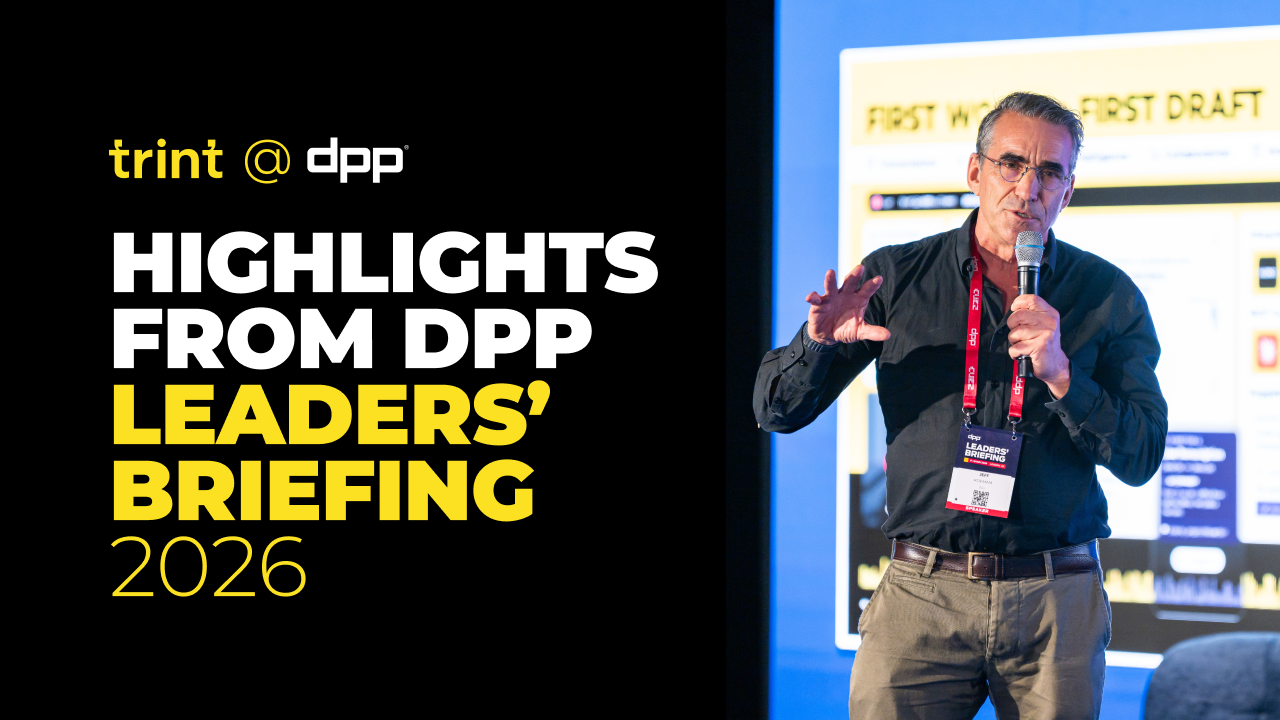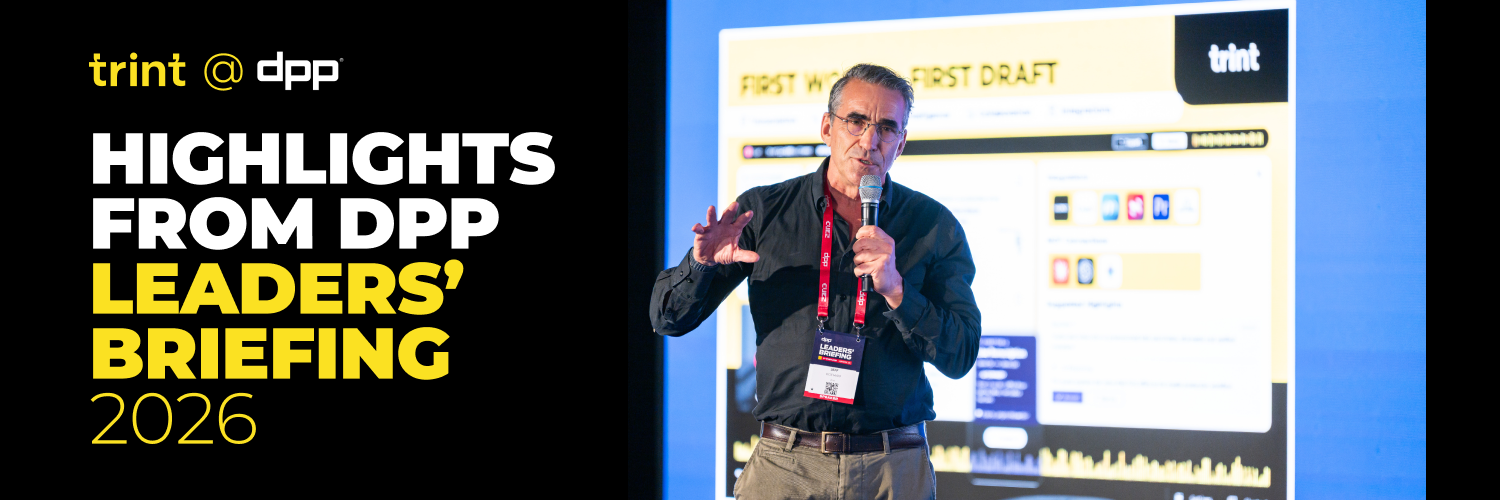
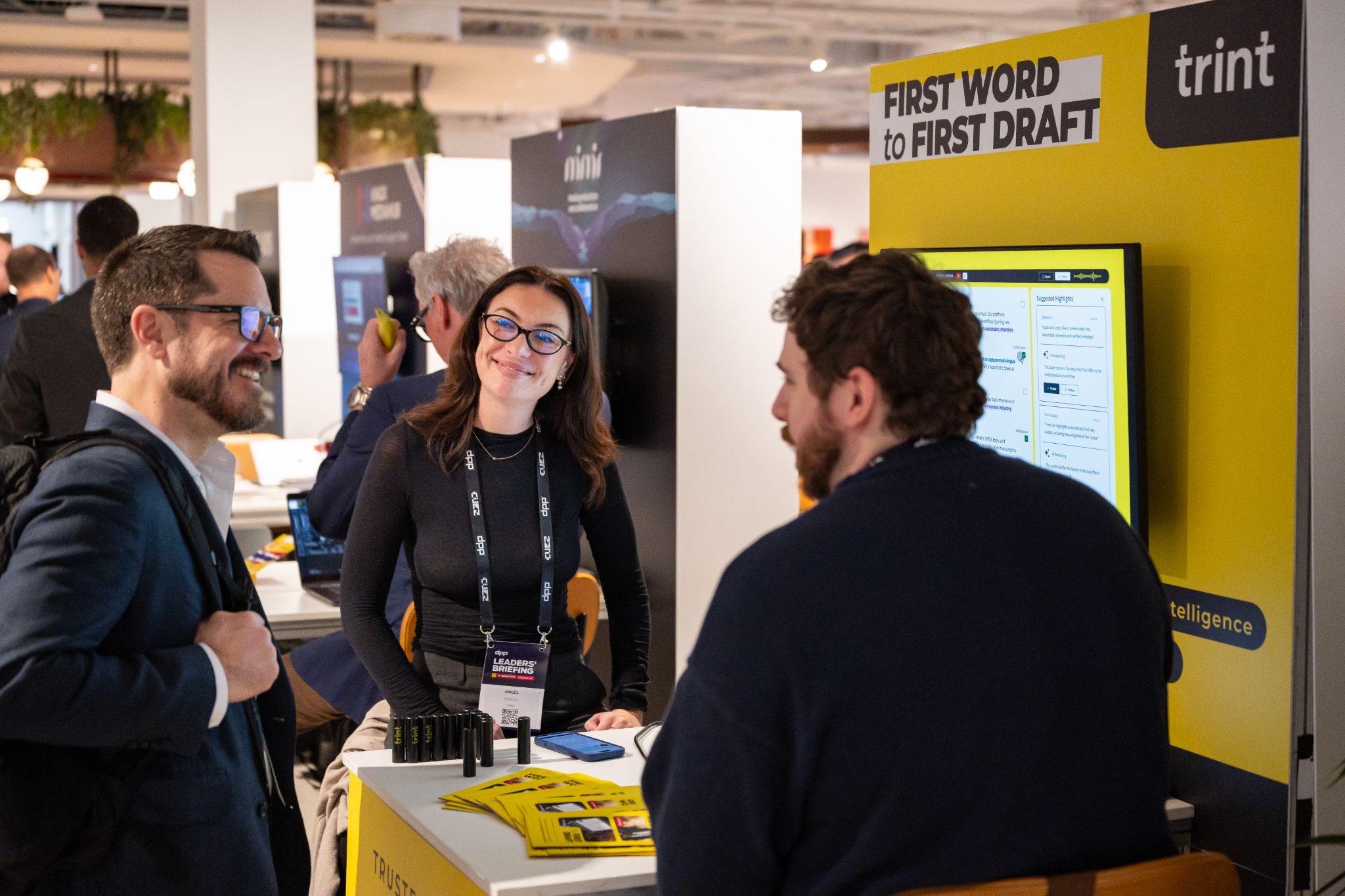
Every November, some of the media's most senior decision-makers gather to set the agenda for the year ahead. This year's DPP Leaders' Briefing took place at Convene Sancroft, St Paul's on November 17-18, with leaders from more than 30 organizations on stage. Trint was there at stand 6 across both days and, as VIP Breakfast Sponsor, we brought the coffee too.
The biggest takeaway? The industry has moved past AI pilots. Every broadcaster in the room is on the road to becoming AI-native, and the hard part isn't the technology. It's priorities, skills, team structures and trust.
DPP Leaders' Briefing is a closed event where speakers share candidly, so we've summarized themes without quoting or attributing anyone. Here's what else we learned from the event.
Nobody across the two days was asking whether AI works. Agents are already running builds, monitoring services and tracking content through the supply chain. And because AI is becoming infrastructure, broadcasters are planning for it like infrastructure, with a plan B if a model becomes unavailable. Most say they're already seeing a return. The question has moved from "can we?" to "what's worth owning?"
Our Chief of Staff Mark Steinmeyer picked up his favorite line of the event from a speaker who compared AI-built software to a free puppy. The puppy was never the cost. The cost is feeding it, training it and walking it in the rain for years to come.
Broadcasters can now build a working tool in days. But someone still has to secure it, support it and keep it running a year from now. The emerging answer is to build the last mile and buy the rest: teams are creating their own workflow tools while buying more than ever underneath.
When code is cheap, the bottleneck moves to priorities, decisions and change. Automate one step and you just move the queue downstream. The hardest skill in media technology right now may be saying no.
The teams getting it right have collapsed the distance between asking and shipping. We heard of business and tech teams meeting twice a day and shipping a user's request in under a day. Business teams are building their own prototypes too, and the smart response is to turn the best of that "shadow AI" into supported products, not shut it down. The scarce skills are now product judgment and orchestrating AI agents well. Some leaders also described AI as a colleague rather than a tool.
Quick builds are perfect for a one-off project; the risk comes when the prototype quietly becomes infrastructure and the person who built it has moved on. Broadcasters are tired of adding tools: each one is another connection to maintain and, with AI helping attackers find old flaws faster than ever, another door to defend. A system you can understand is a system you can protect.
Broadcasters will hand more and more work to AI, but they still answer for what goes to air. The message we heard was clear. People need to see what AI is doing and be able to step in. AI agents will happily tell you something is done when it isn't, so a person checks anything that matters before it's published. AI should be implemented to free people up for higher-value work, not to replace them. Trust and verification is a broadcasters' edge against misinformation.
Audiences don't watch everything. They watch moments. A moment's value peaks within minutes. But the moment doesn't end there. When the same clip becomes tonight's highlight, tomorrow's social video or a podcast segment, what makes that possible? It’s the context: who was speaking, what was at stake, when and where it happened. A clip cut loose from its context is hard to find, hard to reuse and harder still to trust.
With AI driving recommendations, metadata is your shop window, and provenance has to travel with the content too. Broadcasters described the same ambition in different words: create once, enrich automatically and publish everywhere. There were real examples, such as AI clipping and transcribing round-the-clock footage to build a nightly show, or scene-level search that finds a moment in seconds rather than hours.
The big lesson? Context has to be captured at the moment itself and travel with the content, not be rebuilt by hand later. It's the problem we work to solve every day at Trint, and exactly why we're part of the Story Object Model.
Broadcasters want to know where their AI runs, who operates it and what happens if it's switched off. Multi-cloud and on-premises are back in favor, and European broadcasters in particular want less reliance on any single provider.
That raises the bar for suppliers like us. If customers can build the first version themselves, we have to earn our place beyond writing code. Broadcasters want tools that are secure by design, open to their own AI tools, priced simply and proven in production, not demos.
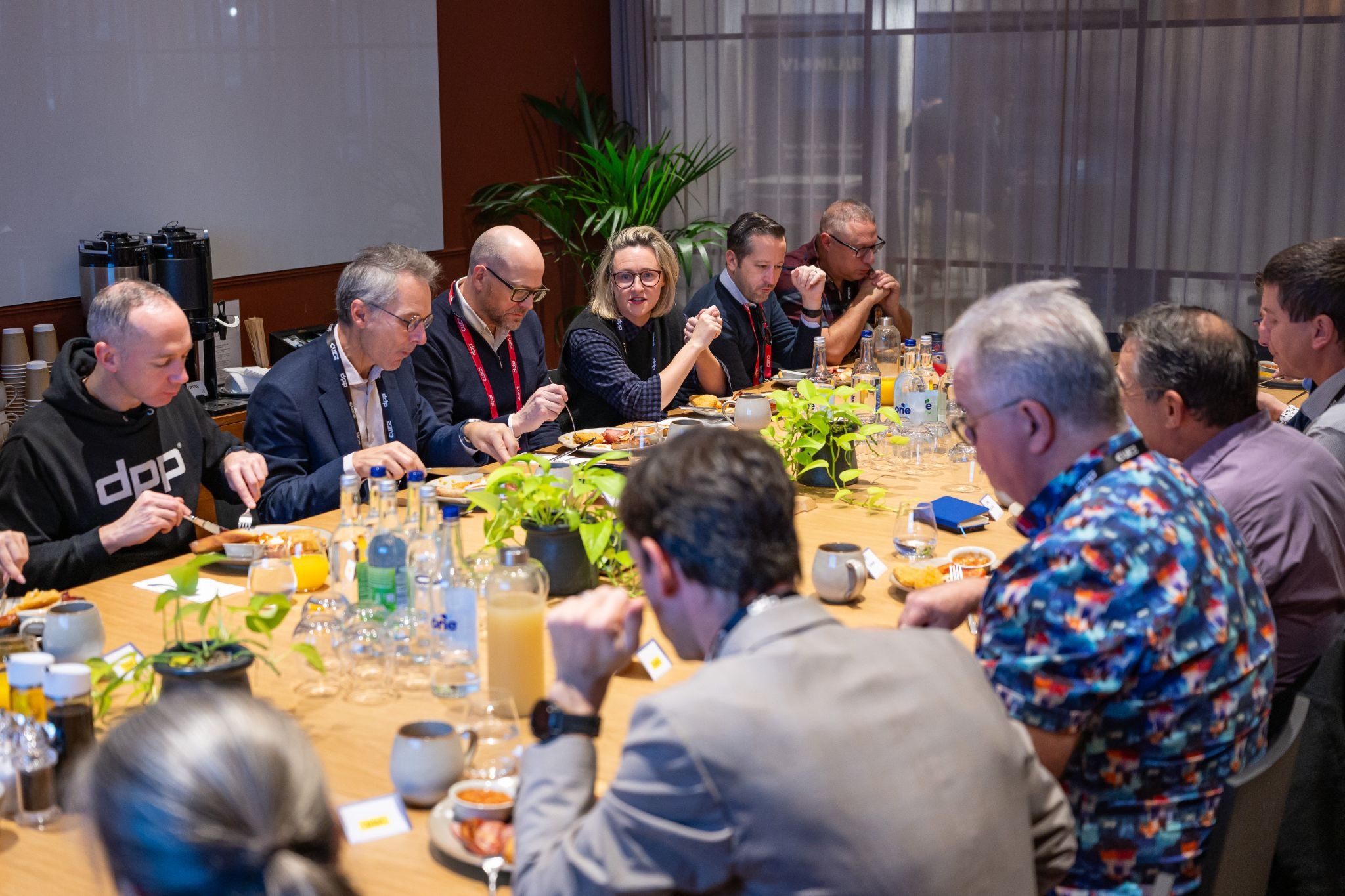
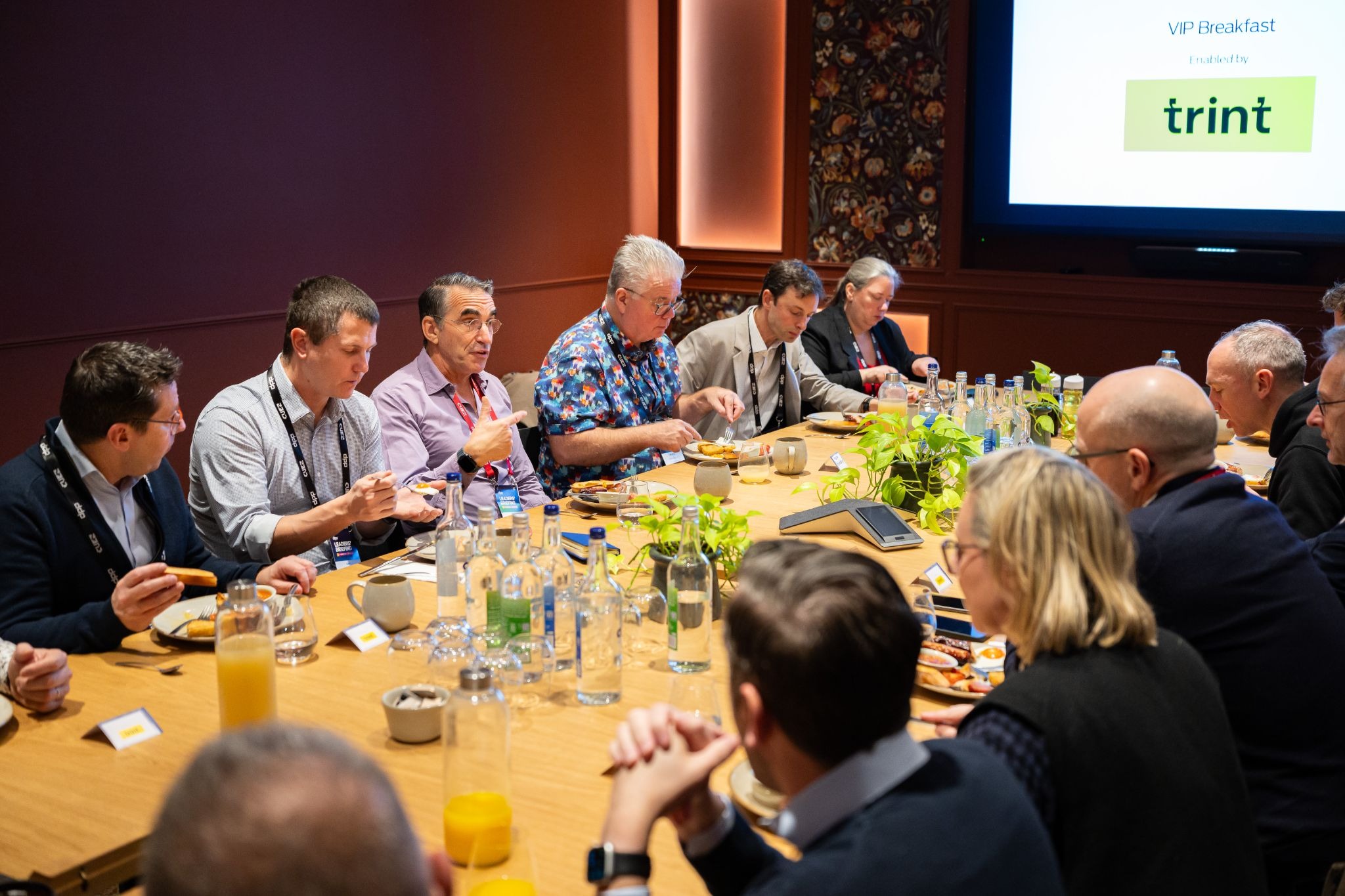
Some of the best conversations happen over coffee. On day two, our CEO and Founder Jeff Kofman and VP of Product Tessa Kaday hosted Trint’s VIP breakfast for a group of senior media leaders. Jeff spent more than 30 years as a journalist and foreign correspondent, and Tessa more than 20 years in global live news at Reuters.
The discussion kept coming back to one question: how fast should organizations move towards building an agentic newsroom? There was excitement in the room, balanced by caution. Nobody wants to fall behind, but leaders are weighing the pace of change and the level of investment against the promise of more cost-effective ways of working.
A big thank you to everyone who joined us, and to the DPP for having us.
If building is cheap, you might expect specialist suppliers to matter less. What we heard at DPP says the opposite. For newsrooms, the question is no longer build or buy, but what's worth owning. Build what makes your journalism different. For everything else, ask who will walk the puppy.